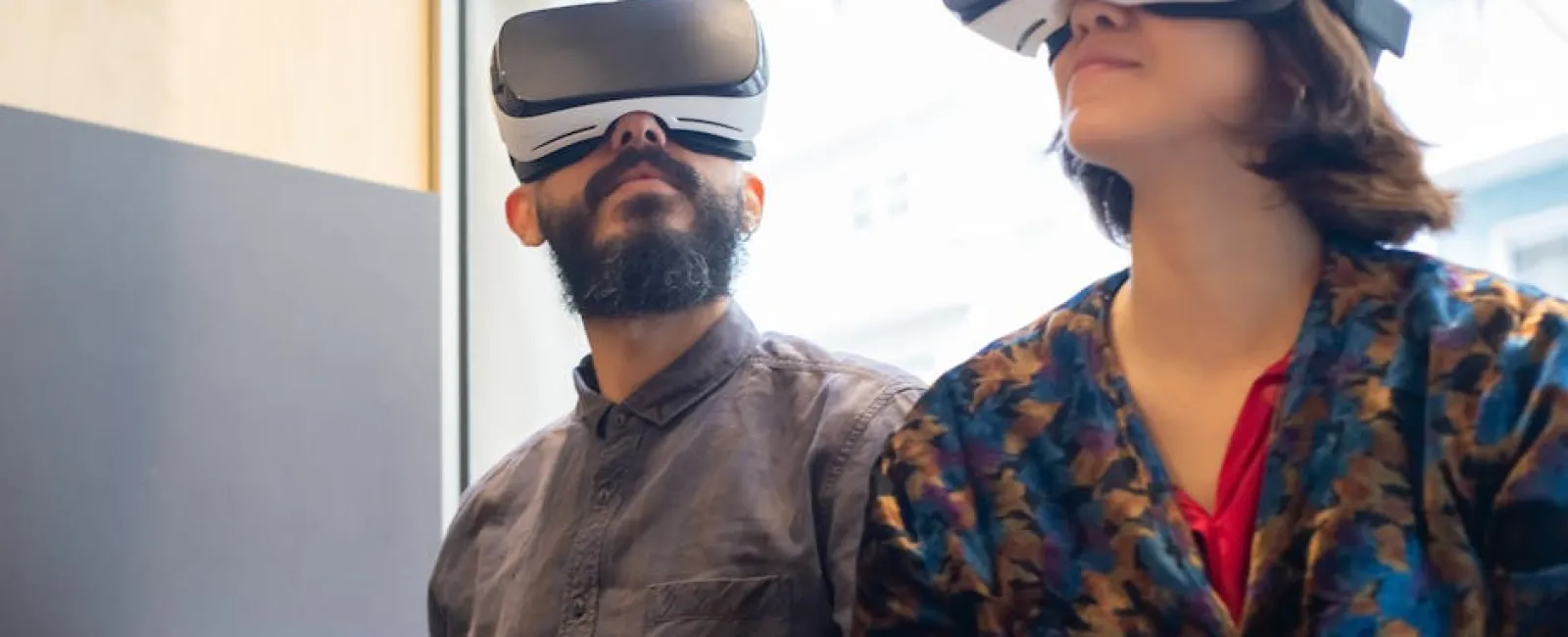
The integration of advanced learning technologies like virtual reality is rapidly transforming the higher education industry and has been for many years. As institutions seek to enhance educational delivery through innovative solutions, Virtual Reality (VR) labs and immersive learning environments have emerged as transformative tools. This article explores the burgeoning role of virtual reality in higher education, particularly through the implementation of VR labs in universities.
The Rising Influence of Virtual Reality in Education
Virtual reality in higher education is not just a technological novelty but a pivotal component of contemporary learning strategies. By creating interactive 3D learning environments, VR technology provides students with unparalleled access to immersive classroom experiences. This aligns with a growing emphasis on experiential learning, allowing individuals to engage with course material in highly interactive ways that traditional classroom settings cannot always facilitate.
Expanding Learning Horizons with VR Labs
VR labs in universities serve as hubs for this educational transformation, offering a varied array of applications. These labs facilitate virtual reality learning environments that extend beyond the capabilities of physical labs. For example, VR science labs in colleges allow students to undertake experiments that would be too costly, dangerous, or complex to perform in reality. The scalability and flexibility of VR technology also mean that these labs can be accessed from anywhere, supporting the shift towards remote learning with virtual reality.
- Experiential Learning Unleashed: Students are no longer passive recipients of information; instead, they become active participants in their learning processes. Thanks to immersive learning technology, colleges can simulate real-world scenarios where students can hone their critical thinking and problem-solving skills.
- VR Simulations: Particularly in STEM education, VR simulations for students provide immersive environments where theoretical knowledge meets practical application. These simulations offer a risk-free laboratory for students to explore concepts and troubleshoot experiments before applying them in real-world settings.
VR Education Solutions and Student Engagement
One of the most significant challenges faced by higher education institutions today is maintaining student engagement. Virtual reality education solutions address this by fostering dynamic and captivating learning environments. With VR student engagement tools, the learning process becomes more interactive, increasing attention levels and fostering deeper understanding. By offering compelling, narrative-based experiences, VR encourages students to engage with content actively.
Digital Transformation through VR in Universities
Higher education digital transformation with VR is not only reshaping how information is delivered but also redefining how institutions prepare students for the future workforce. VR training programs in universities bridge the gap between academic knowledge and practical, career-ready skills. This is particularly relevant in fields where spatial awareness and hands-on experience are crucial, such as architecture, medicine, and engineering.
- Interactive 3D Learning Environments: These environments provide a platform where students can visualize complex structures and processes in three dimensions, facilitating a deeper comprehension of subjects that require spatial understanding.
- Virtual Experiments in Education: Virtual experiments offer enhanced flexibility and accessibility, allowing students to repeat experiments as needed, exploring various parameters until mastery is achieved. Thus, VR becomes an invaluable tool for mastery learning models.
VR Labs as Catalysts for Innovation
VR campus innovation reflects a broader trend towards technological adoption in academia. By integrating VR labs, universities not only improve student learning outcomes but also position themselves as leaders in cutting-edge educational practices. Such initiatives signal to prospective students and stakeholders that these institutions prioritize advanced, impactful education.
Virtual Reality and Augmented Education
While much emphasis is placed on VR, the incorporation of augmented reality (AR) in education can further enrich teaching methodologies. The fusion of these technologies offers comprehensive augmented and virtual reality education experiences, blending real and virtual elements to enhance learning. Instructors can superimpose digital information over physical spaces, offering context-rich content that augments the traditional learning experience.
STEM Education and VR Labs
In the realm of STEM education, VR labs serve as powerful tools for engaging students in complex scientific concepts. The immersive nature of VR science labs in colleges allows for visualization and manipulation of abstract theories, fostering deeper understanding. These labs become incubators for problem-solving and innovation, essential components of STEM education.
Strategic Implementation in Higher Education
For higher education administrators, the transition to incorporating VR labs involves several strategic considerations:
- Infrastructure and Investment: Initial setup requires substantial investment in VR hardware and software, but the scalability of these solutions can lead to long-term cost efficiencies. Because immersive VR and 3D simulations demand massive, low-latency data streams, institutions must also secure their cloud infrastructure. Partnering with a robust cybersecurity provider like NewPush ensures the campus can support these advanced hybrid environments without exposing student data to new security blind spots.
- Faculty Development: Instructors must be empowered and trained to utilize VR technologies effectively in their teaching, ensuring that they can seamlessly integrate these tools into existing curricula.
- Curricular Design: Courses must be thoughtfully redesigned to incorporate VR experiences, ensuring that these technologies enhance learning rather than serve as superficial add-ons.
- Assessment and Evaluation: Continuous evaluation of VR implementations is necessary to measure their impact on learning outcomes and make data-driven improvements.
Implementing virtual reality labs is a complex but rewarding endeavor. As a cornerstone of higher education digital transformation VR efforts, these immersive environments provide a flexible, scalable approach to teaching that equips students with the skills needed for the digital age. By investing in VR education solutions, institutions are better positioned to meet the demands of tomorrow's learners and maintain relevance in an increasingly competitive educational landscape.
As immersive technologies continue to evolve, their role in shaping higher education will undoubtedly grow, inviting administrators to embrace these tools for both immediate enhancement and long-term strategic advantage. Schedule a 15-Minute Discovery Call with NewPush today to see how virtual reality and other cutting-edge technologies can work with your educational institution.